Physical Address
304 North Cardinal St.
Dorchester Center, MA 02124
Physical Address
304 North Cardinal St.
Dorchester Center, MA 02124

There’s something timeless about a good story. From ancient myths whispered around fires to modern ads we scroll past on our phones, stories have always been humanity’s favourite way of making sense of the world. We don’t just listen to stories; we feel them. And that’s exactly why storytelling has become one of the most powerful tools in marketing.
When a brand tells a story, it speaks to us on a deeper level than a list of features ever could. It gives meaning to the product and emotion to the experience. As Donald Miller explains in Building a StoryBrand (2017), people don’t buy the best products; they buy the ones they understand the fastest. And what they know best is a story.
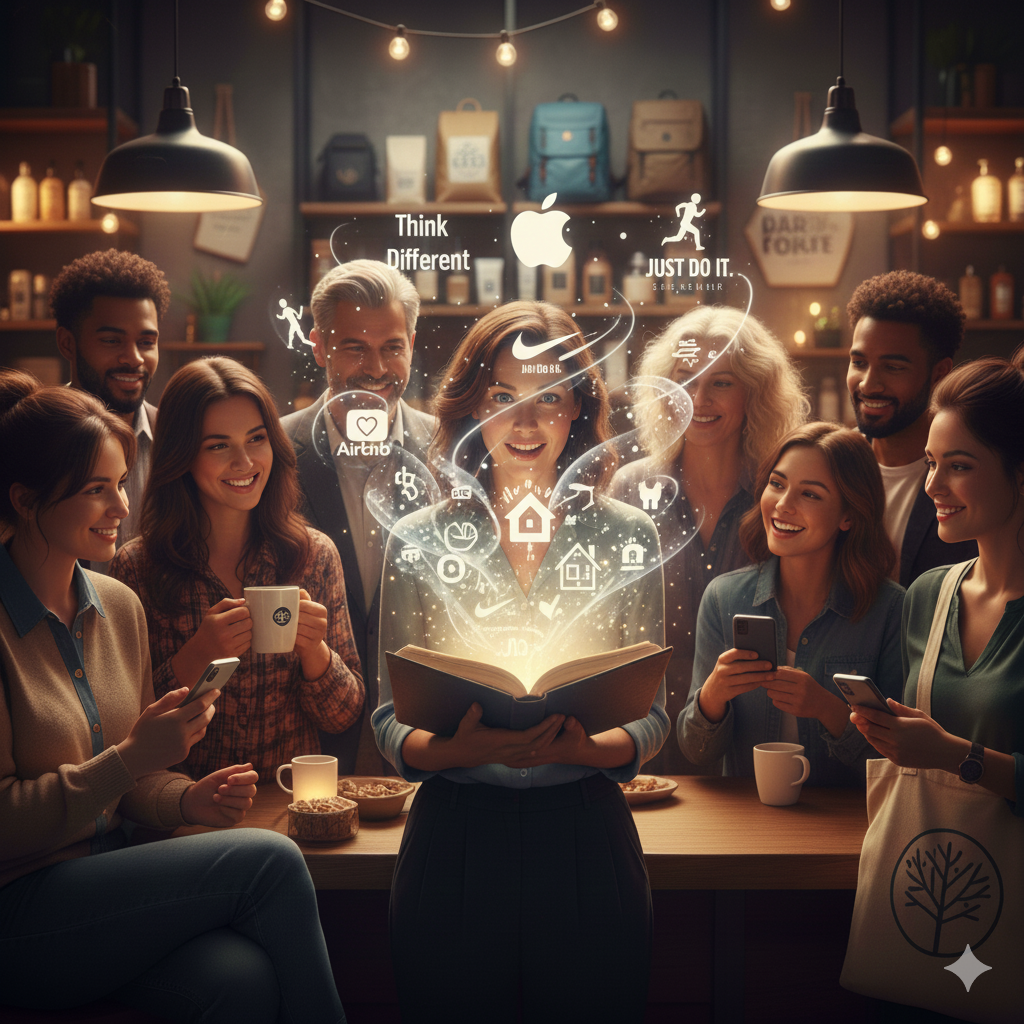
Think of Apple. It doesn’t talk about processors or megapixels. It tells us to “Think Different.” That’s not a slogan; it’s a narrative of rebellion, creativity, and self-expression. Nike doesn’t just sell shoes; it invites us into a story of courage and movement. When we buy into these brands, we’re not purchasing objects; we’re buying pieces of identity.
Robert McKee once said that “stories are the currency of human contact.” They shape how we see ourselves and the world. In marketing, this means that trust isn’t built solely by persuasion; it’s built through emotional resonance. When a brand’s story reflects our own values, we instinctively feel that it understands us, and that’s the beginning of loyalty.
Psychologically, stories activate more areas of the brain than plain facts do. Neuroscientist Paul Zak found that a well-told story releases oxytocin, the same chemical responsible for empathy and bonding. That’s why we feel connected to certain brands as if they were people. We don’t just recall what they sell; we remember how they made us feel.
One of the most fascinating examples of this is Airbnb. Instead of focusing on the service itself, the brand tells stories of belonging; of travellers finding “a home anywhere.” That story taps into a universal emotional need: the desire to feel connected, safe, and accepted. As Cialdini notes in Influence: The Psychology of Persuasion (2007), similarity and connection play a powerful role in shaping our decisions. Airbnb doesn’t sell accommodation; it sells the feeling of belonging to a global community.
This is why storytelling in branding is more than a marketing technique; it’s a psychological bridge. It connects the product to the person through emotion, values, and shared identity. It reminds us that buying is rarely a rational act; it’s a reflection of who we are or who we wish to become.
But storytelling isn’t just for big brands. Even small businesses or personal projects can use it authentically. When a founder shares why they started, what they believe in, or the struggles behind the creation, that vulnerability creates trust. People don’t want perfection; they want truth. A good story shows the human side of a brand, and in a world full of polished ads, that honesty stands out.
Ultimately, storytelling reminds us that marketing isn’t about convincing, it’s about connecting. When we trust a brand, it’s not because of its product specs or slogans, but because somewhere in its story, we saw a glimpse of ourselves.
As Seth Godin beautifully said in All Marketers Are Liars (2005), “Marketing is no longer about the stuff you make, but about the stories you tell.” And when those stories are real, emotional, and human, they do something remarkable: they build trust that no discount or campaign can replace.